g
Small, spooky and seriously clever; The jumping spider
Jumping spiders!
Continuing with my efforts to provide a vaguely Halloween themed newsletter piece each year, this month I am writing about spiders! More specifically jumping spiders – so the cuter end of the spider spectrum.
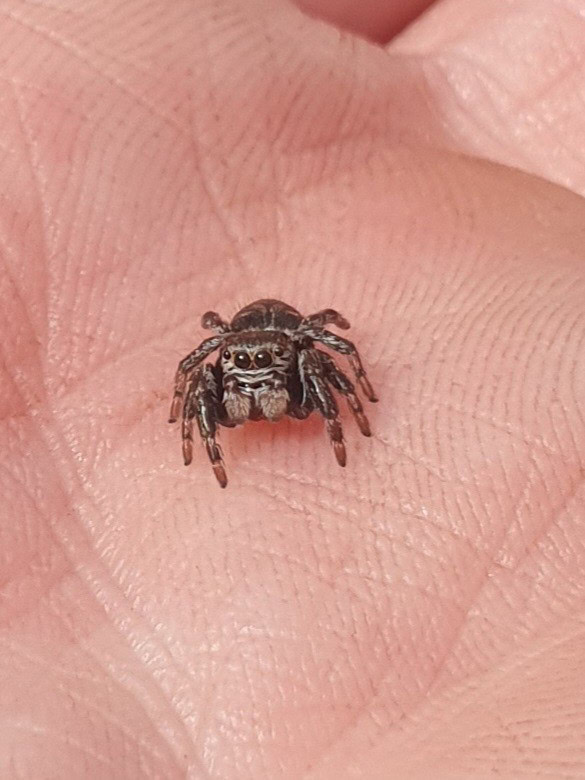
We have nearly 40 different species of jumping spider in the UK and most are no bigger than a fingernail and many are considerably smaller. They are relatively easy to tell from other spider species by their short, stocky build, short legs, square fronted head shape and large, obvious forward pointing eyes that take up much of that square face. They often also seem to have eyelashes which adds to their relatively cute appearance.
Jumping spiders do not spin webs to catch their prey, at least not of the type you see strung up prettily between twigs in the garden or as a dusty mess of threads in the corner of a room. They use their web as a rope for abseiling, anchoring it to a safe spot before leaping to catch their prey so they may quickly retreat if necessary. They are able to jump quite a distance with leaps of 10-20cm not uncommon, which would be equivalent of you jumping 4-8 cars from a standing start.
There are other times a jumping spider will make use of it’s web spinning abilities. All spiders can only grow in size by shedding or moulting the hard outer skeleton they are in (sometimes that ‘dead spider you think you see is actually just an old spidersuit). This is a difficult and dangerous process that involves a great deal of energy. They are very vulnerable and soft when they first shed their skin and if disturbed my lose limbs in the process or become hopelessly stuck. As a result, jumping spiders will spin a web cocoon tucked away in a crevice where they can hide for several days during this time.
Jumping spiders will eat a variety of other invertebrates including animals much larger than they are, such mosquitos and even other spiders. They are able to identify which prey animals are dangerous to them and which are not and adapt their hunting strategy accordingly. That’s right, this tiny animal with a brain of less than 100,000 neurons (for context we humans have 86 billion) is able to develop hunting strategies. The jumping spider will approach harmless creatures head on, using some ambush techniques for those which might easily escape. When hunting more dangerous prey, the jumping spider carefully plans it’s route and may take up to an hour to get into the best attack position. They are able to take a very convoluted route to this position and are able to remember the location of the prey even if they can’t see it. I think I need one to find my car keys for me on a regular basis!
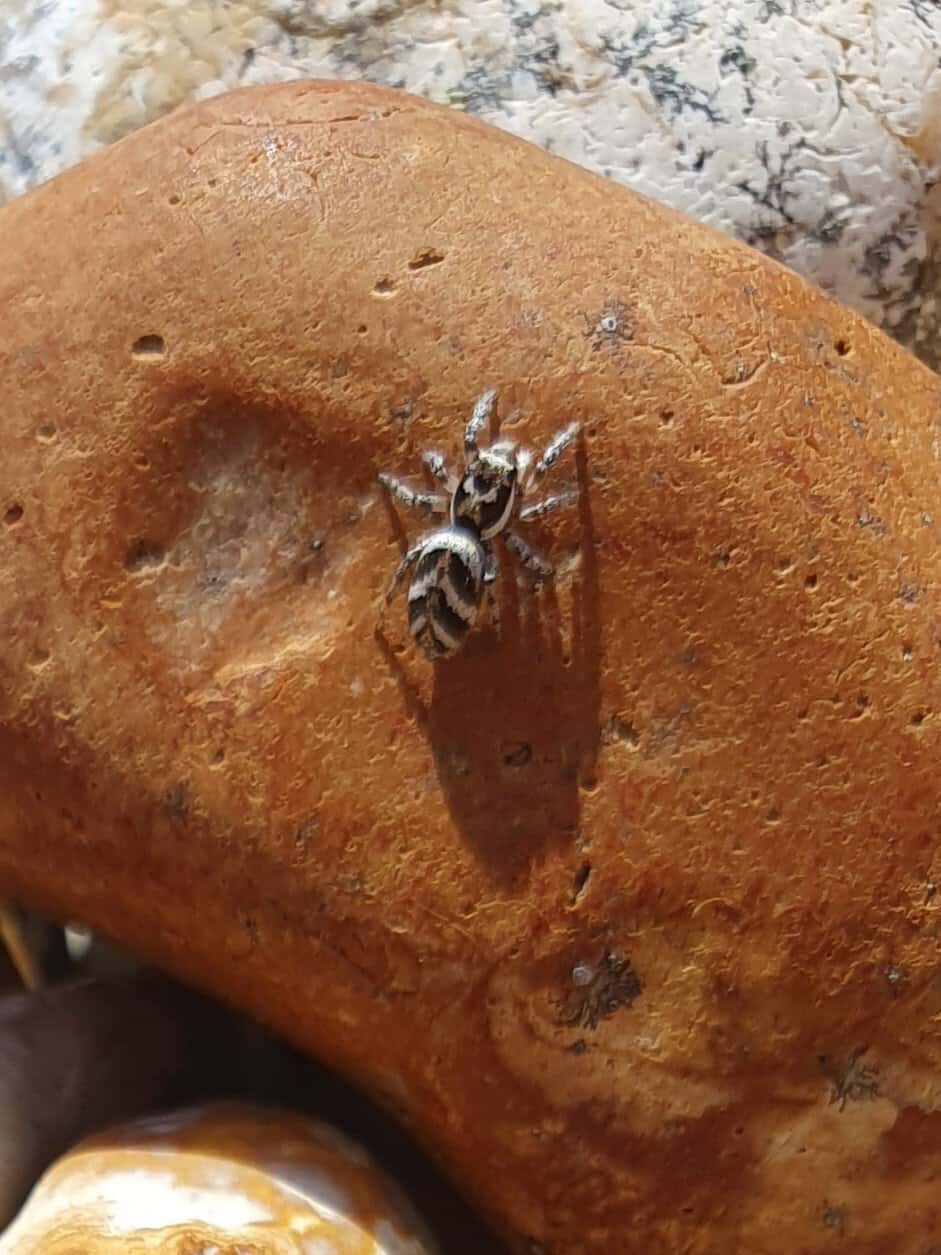
There are several species that you may encounter around you, including the zebra jumping spider (pictured) which is coloured as you might expect with black and white stripes. They tend to be most noticeable on sunny brick walls, picnic tables and fences. There is also the fuzzy brown, downy jumper (search for Attulus pubescens if you want to look them up) which is often found around human habitation picking off flies and mosquitos and despite only being about 5mm in length is able to prey on cellar spiders.
Some species are very adaptable in the habitats they require, turning up in gardens and wider countryside alike, others might specifically require woodland – some showing a preference for oak trees or pine trees. Incredibly (and really, I should have stopped being so surprised by its inventiveness and requirements of invertebrates by now) there is even a species that specialises in utilising old whelk shells on shingle beaches as a home. Do make sure you’re not leaving a spider homeless next time you are beachcombing!
So keep an eye out for jumping spiders, especially on sunny days, on walls and fences around you, you may well discover a tiny spider who turns to say hello before vanishing in a jump faster than you can blink.
Gillian Fisher, Ecologist
Photos by kind permission of Gillian Fisher